

An Insight into the Project "Development of a Smart Robotic System for Packaging Automation" as Part of the PACK-IT Initiative
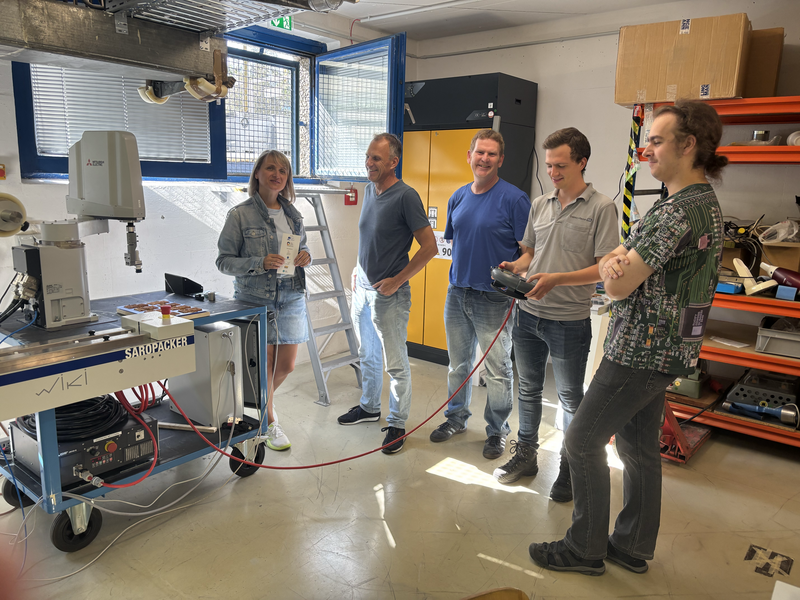
The collaboration between BHT and its Ukrainian partner universities, NUBiP and NUFT, began long before the launch of the PACK-IT project. Prof. Stefan Junge from Department V has been actively involved in collaborating with Ukrainian partner universities since 2019. Since 2022, Prof. Roland Kirchberger from Department VII has also been engaged in professional exchange with the universities.
In terms of joint student projects, the exchange initially took place primarily in a digital format: German and Ukrainian students presented their projects and technical developments to one another during joint online sessions, discussing their approaches and sharing experiences.
With the launch of the DAAD-funded PACK-IT project, an opportunity arose to expand this exchange into a new dimension: students from the Ukrainian partner universities can now visit BHT and work on concrete projects on-site alongside BHT students.
In search of suitable opportunities for such practical collaboration, Prof. Kirchberger and Prof. Stefan Junge, head of the Packaging Technology Laboratory in Department V, exchanged ideas for joint projects. From this dialogue, the project "Development of a Smart Robotic System for Packaging Automation" emerged.
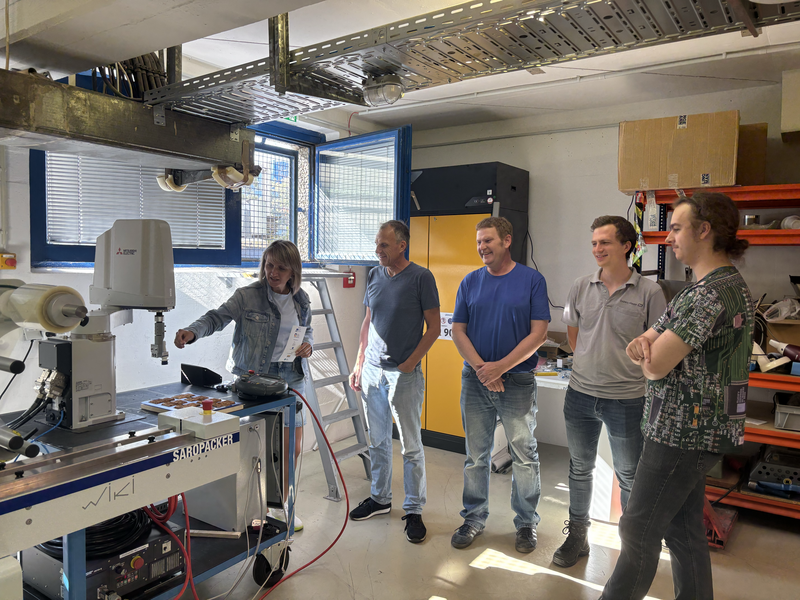
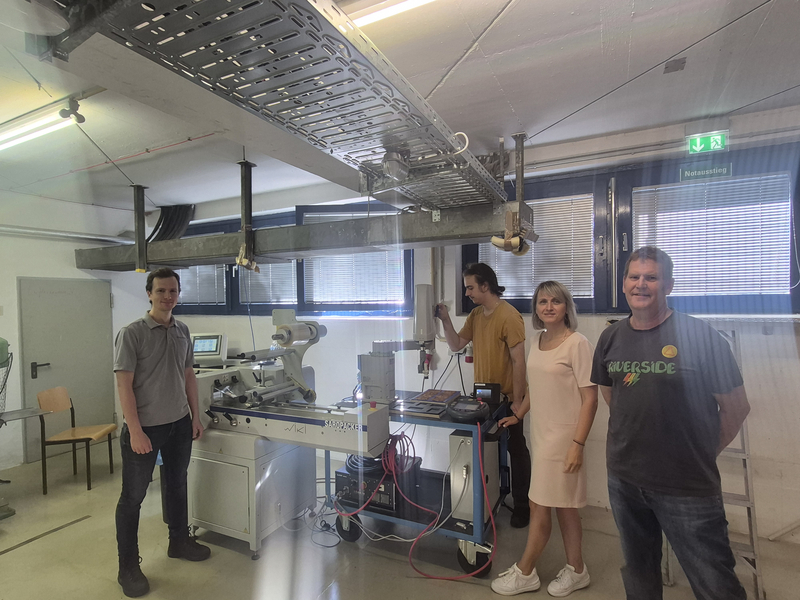
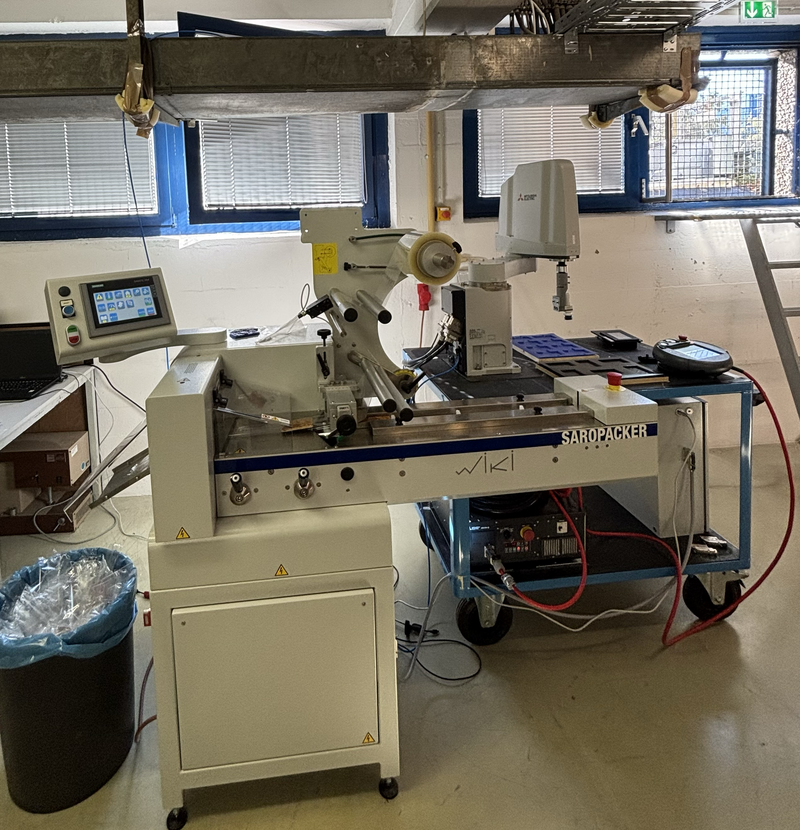
In the Packaging Technology Laboratory, students from different disciplines and universities are now working together to integrate a Mitsubishi Electric SCARA industrial robot into a horizontal flow-wrapping packaging line. What previously took place mainly in the digital space has transformed into hands-on collaborative work in the laboratory—international, interdisciplinary, and practical.
Laura Schnerring is a master’s student in Packaging Technology and Management at BHT and supports the PACK-IT project as a student assistant. For this article, she spoke with the participants about how the project originated, how laboratory collaboration works, and what new opportunities it opens up for students and teaching.
From Concept to Teaching Project
Laura: Prof. Junge, how did the concrete technical idea for this joint project come about?
Prof. Junge: The starting point was an earlier student project in which a student developed custom silicone molds for chocolate. This raised the question of how such a product could be automatically fed into a packaging machine. That sparked the idea of combining a real packaging process with robotics and automation. By pairing existing machinery with new sensor technology and suitable programming, this industrial process can be realistically mapped in the laboratory.
Laura: What added value does the project offer to students and academic teaching at BHT?
Prof. Junge: The test bench can be used for interdisciplinary project modules, bachelor's theses, and master's theses in packaging technology, mechatronics, electrical engineering, and computer science. It is also an integral component of the master’s module "Automation Technology and Robotics." Students develop a comprehensive systems-level understanding: they learn to interconnect different technical components, coordinate interfaces, and guide products reliably through an automated process.
The Industry Partner as a Bridge to Practice
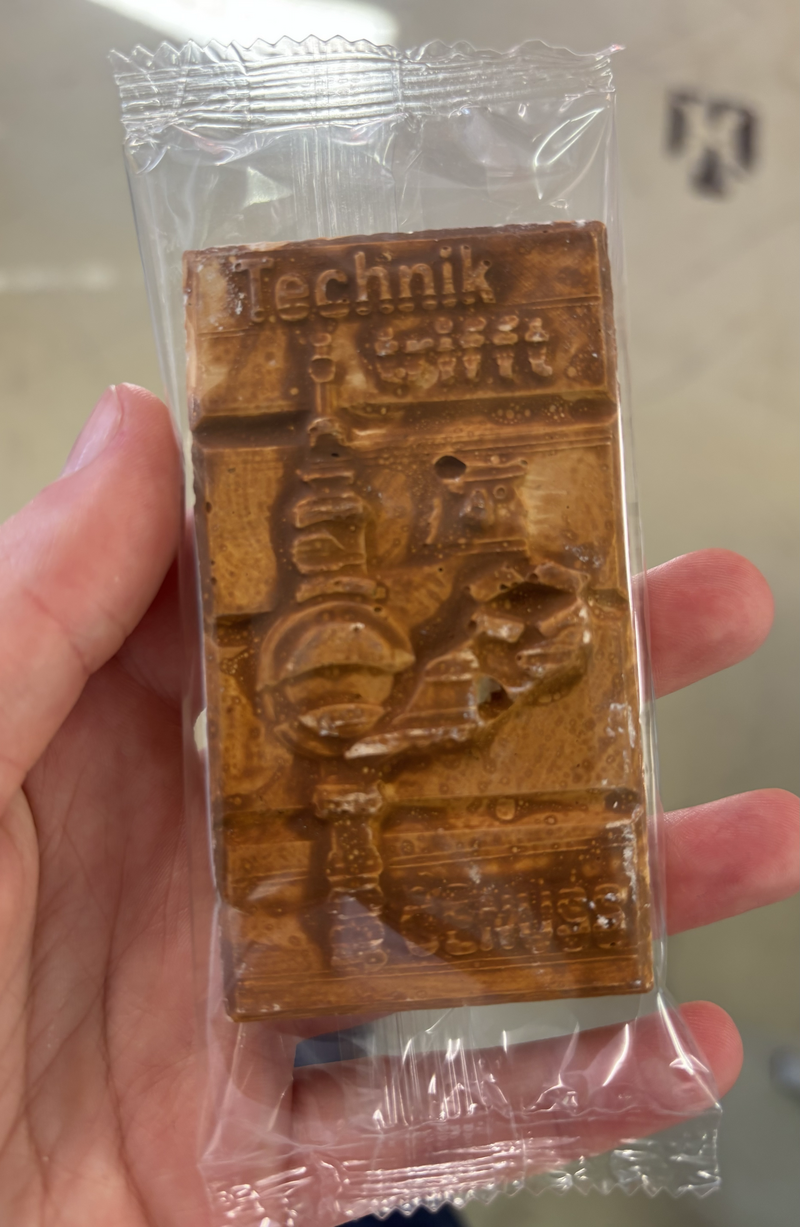
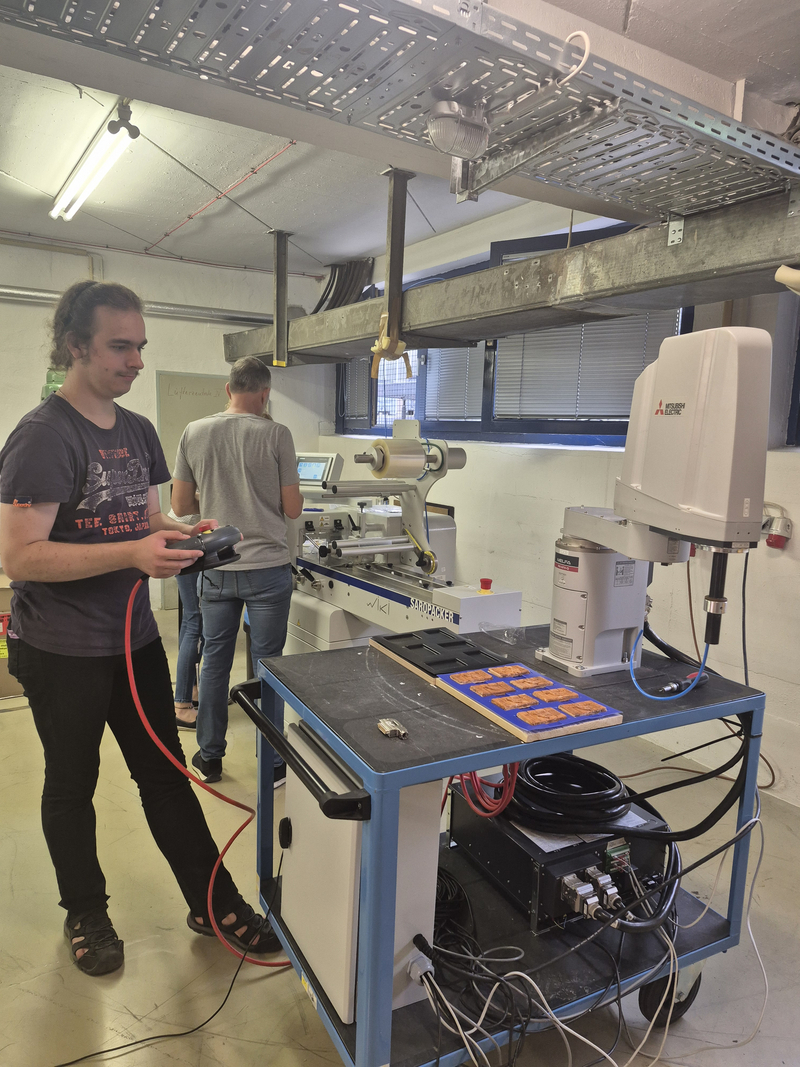
Collaboration with Mitsubishi Electric Europe B.V. plays a vital role in the practical implementation of the project idea. Mr. Weichert represents the company and also serves as an adjunct lecturer at BHT. He contributes industrial hardware along with his application and systems expertise to the project.
Laura: Mr. Weichert, why is Mitsubishi Electric supporting this project and providing a SCARA industrial robot for it?
Mr. Weichert: Our goal is to provide students with practical education using real industrial hardware. They should encounter modern automation systems during their studies, overcome hesitations, and gain practical experience that they can apply later in their professional careers.
Laura: What insights into modern industrial automation does the test bench offer to students?
Mr. Weichert: On many traditional machines, parameters still have to be adjusted manually, whereas modern industrial processes are increasingly automated. Students can experience this interface firsthand on the test bench. They learn the interplay of cycle rates, speed, and various technical interfaces. Furthermore, the setup opens up opportunities to address topics such as collaborative robotics and safety management.
Laura: How did you experience the collaboration with Oleksii and Joe during implementation?
Mr. Weichert: The collaboration was outstanding. I had originally planned a significantly smaller scope for this project phase. Thanks to the dedication of Oleksii and Joe, the test bench is already far enough along that I can prepare concrete practical exercises for the upcoming winter semester.
Practical Implementation in the Laboratory
Joe Junge, an undergraduate student at BHT, is working on the hardware implementation. Through his prior vocational training, he brings practical background experience that he can combine with his studies within the project.
Laura: Joe, what tasks have you taken on during the practical implementation?
Joe Junge: My focus is on electrical and mechanical integration. Among other things, I handled the control cabinet wiring and carried out various mechanical adjustments. Using 3D printing, we also produced custom brackets and component mounts to link the different parts together. For me, this is a great opportunity to contribute and expand my practical background while directly applying course content from my studies. I can also have this work credited as an interdisciplinary project module.
Laura: How is the collaboration working with Oleksii, who focuses mainly on the software and control side?
Joe Junge: The collaboration is working very well. Our tasks complement each other: while I primarily handle hardware integration, Oleksii’s focus is on control systems and software. We communicate in English, coordinate our workflow steps, and tackle complex challenges together. This enabled us to advance the implementation faster than originally planned.
Laura: What future opportunities does the test bench offer for subsequent student projects?
Joe Junge: The setup provides a solid foundation for upcoming project work and theses. Plausible next steps include developing the gripper systems further, testing new pick-and-place scenarios, implementing applications like direct packaging labeling, and optimizing PC interfaces and safety features for live demonstrations.
International Academic Exchange
Within the framework of PACK IT's international cooperation, Oleksii Hryhorovych, a master’s student at the National University of Food Technologies (NUFT) in Kyiv, is completing a two-month research stay at BHT. Together with Joe, he is working on the practical realization of the project.
Laura: Oleksii, what are you studying, and how did you join this project at BHT through PACK IT?
Oleksii Hryhorovych: I am a master’s student at the National University of Food Technologies in Kyiv, specializing in automation, computer-integrated technologies, and robotics. Previously, I earned a bachelor's degree in cybersecurity at KPI and another bachelor's degree in automation at NUFT. Through PACK IT, I received the opportunity to come to BHT for two months and collaborate on a real automation project.
Laura: What are you working on specifically, and how does your work complement Joe's?
Oleksii Hryhorovych: My focus is on the control and software side. I am working on synchronizing the SCARA robot with the packaging machine, configuring the user interfaces, and managing programming and debugging. Joe concentrates more on electrical and mechanical integration. Our tasks interlock directly, so we coordinate many operational steps together and resolve technical issues as a team.
Laura: What will you take away from your stay at BHT?
Oleksii Hryhorovych: Professionally, I am mainly taking away the experience of methodically analyzing complex technical systems and implementing solutions directly on actual industrial equipment. At the same time, working within an international, interdisciplinary team is exceptionally valuable to me. My advice to other students is to seize such opportunities and take the step to go abroad. You not only gain practical experience, but you also broaden your technical and personal perspectives.
Conclusion
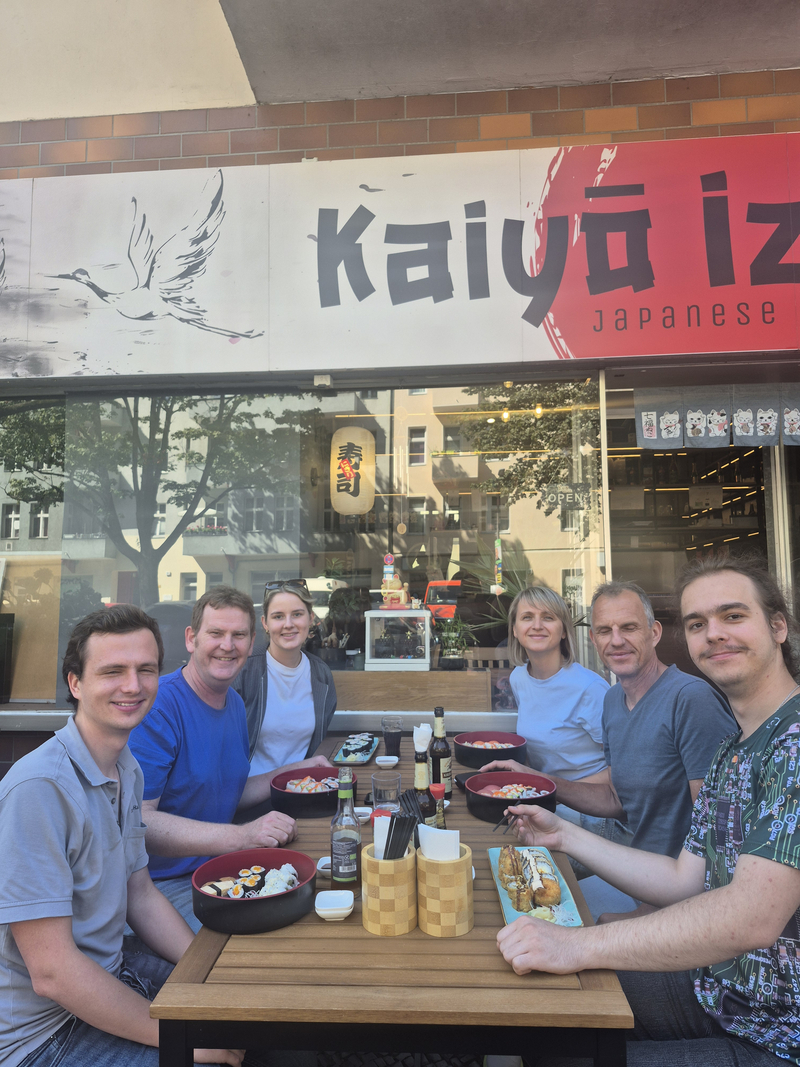
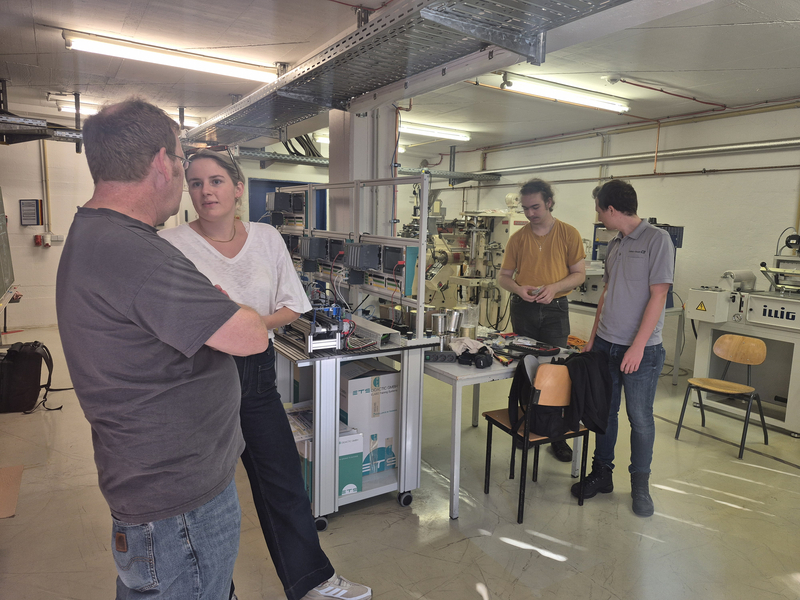
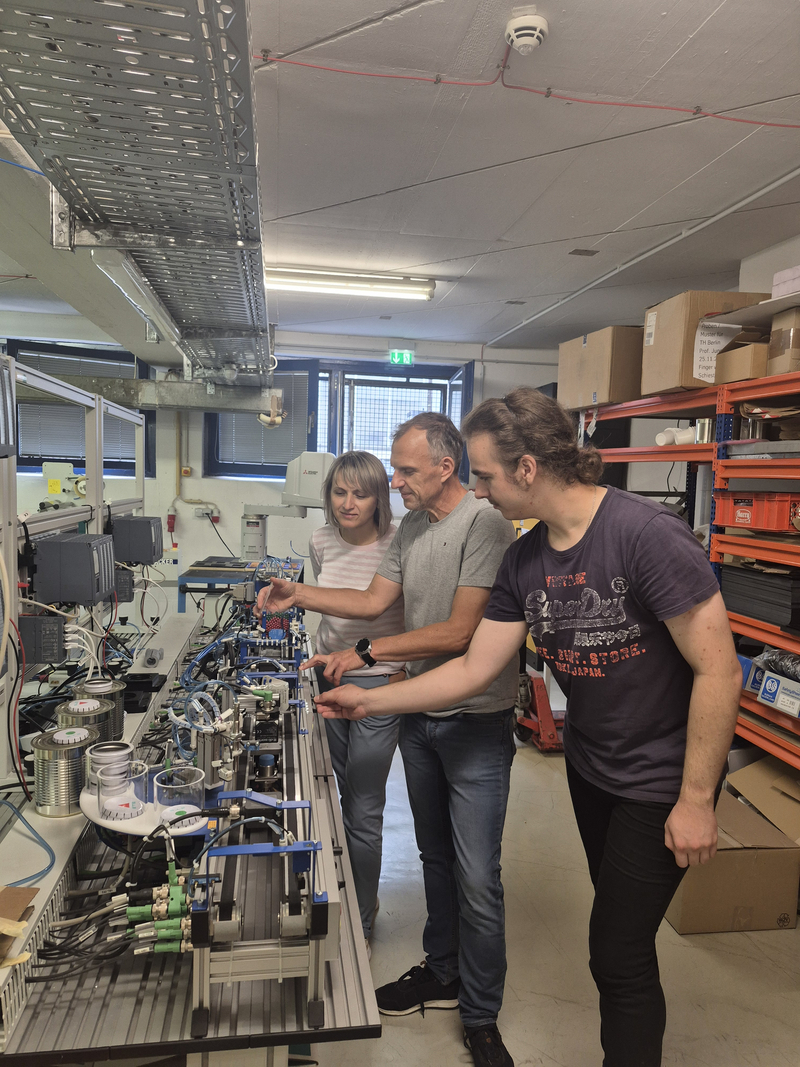
The project exemplifies how the DAAD-funded PACK IT project connects international university cooperation with tangible, collaborative work. Students from BHT and its Ukrainian partner universities work side by side in the laboratory, contribute diverse technical skills and experiences, and develop solutions for a real-world engineering challenge as an international team.
This complements the previously digital exchange between the partner universities with in-person interaction and hands-on teamwork. At the same time, the project's impact extends beyond the current research stay: the jointly developed test bench can continue to be utilized and expanded for academic teaching as well as future student projects and theses.
Interested BHT students who would like to participate in the test bench through theses or project modules are welcome to contact the participating teams in Departments V and VII directly.
