


IMPACT: Concept
The IMPACT Research Consortium at BHT aims to bring together interdisciplinary expertise to establish a comprehensive research program spanning the entire value chain. The program begins with the screening of novel natural products and the investigation of microbial interactions. It includes the selection of suitable production organisms, optimization of production conditions, process-controlled biomaterial production, purification of the resulting products, and the final characterization of biomaterials, as well as process-integrated analytics and quality control.
Through this holistic approach, the consortium seeks to develop innovative solutions and generate new scientific insights that contribute to a wide range of applications, including medicine, diagnostics, environmental engineering, and environmental analytics.
Research Consortium Objectives
The consortium’s overarching objective is to characterize and produce bioactive substances while advancing the analysis of living cell communities. In line with BHT’s guiding vision, City of the Future, the results of these research activities are intended to support applications in hygiene, disease prevention, and healthcare.
Current research projects include:
- Production of an antimalarial compound through the cultivation of recombinant microorganisms
- Prevention of microbial biofilm contamination in drinking water systems and medical applications
- Identification of novel bioactive compounds and production systems through automated high-throughput screening of defined co-cultures of different cell types
Research Infrastructure
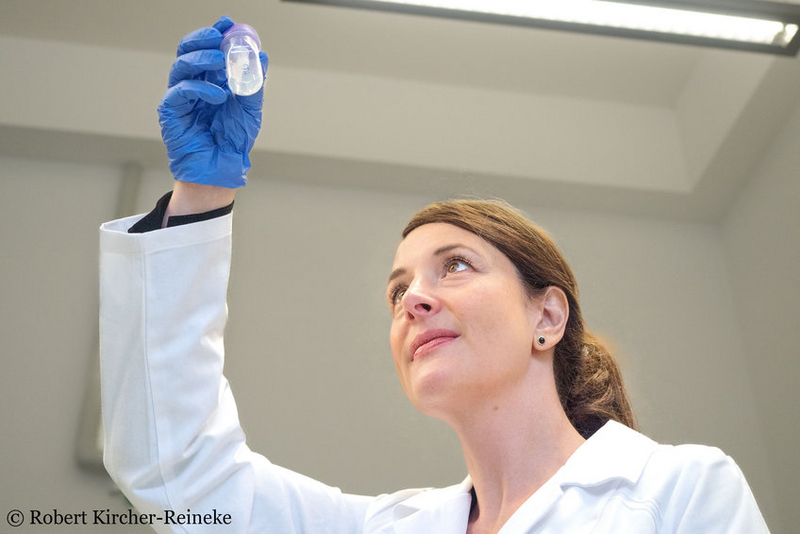
The research infrastructure of the consortium comprises state-of-the-art equipment located in the laboratories of the participating professors from Departments V and VIII, particularly within the Biotechnology and Process Engineering degree programs. It provides the foundation for the development, production, and characterization of biotechnological products along the entire value chain.
The infrastructure includes, among other technologies, automated liquid-handling robots for high-throughput screening of novel bioactive compounds, as well as a wide range of production organisms—from Escherichia coli and Bacillus megaterium to recombinant strains of Cupriavidus necator for the production of PHA bioplastics.
The participating researchers possess extensive expertise in biomolecule design, particularly through recombinant DNA technology and site-directed mutagenesis. Modern bioreactor systems of various scales are available for biotechnological production. This infrastructure is complemented by expertise from Departments V, VII, and VIII in bioprocess development, cell culture, process control, and downstream processing. The biotechnology pilot facilities enable the transfer of laboratory-scale processes to larger scales, supporting both research and education.
Another key strength is the analytical characterization of biotechnological products. Modern bioanalytical methods are available, supported by extensive expertise in biochemistry, molecular biology, and instrumental analysis. The continuous modernization of the research equipment sustainably strengthens the consortium’s research infrastructure and provides an excellent foundation for innovative research projects and interdisciplinary collaborations.


