


IMPACT Research Focus Areas
The IMPACT Research Consortium focuses on four key application areas: bacterial biofilms, malaria, interactions in microbial co-cultures, and the sustainable production and application of PHA bioplastics as an environmentally friendly alternative to conventional plastics.
Bacterial Biofilms
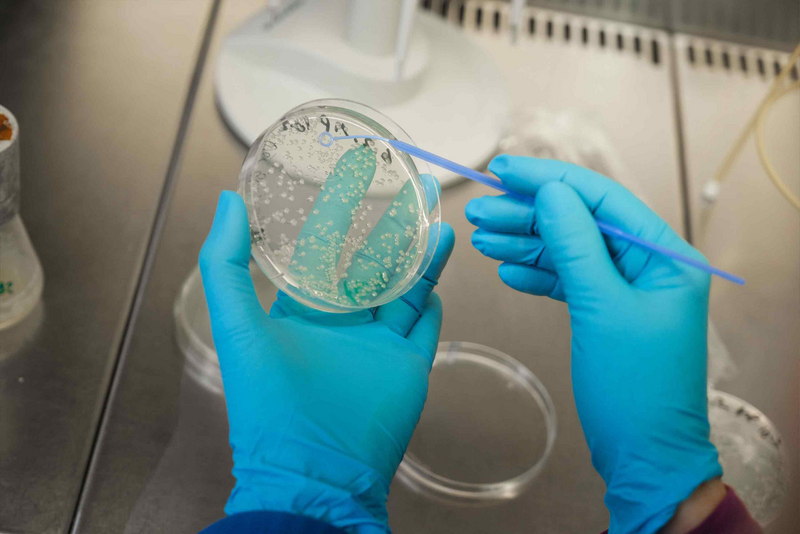
Biofilms are complex communities of microorganisms that grow on surfaces such as teeth, implants, medical devices, and essential infrastructure including water distribution systems. Embedded in a self-produced extracellular matrix, they are protected against antibiotics and the host immune system. As a result, microbial biofilms pose a major challenge in medicine, veterinary medicine, and surface technology.
To prevent and combat biofilms, the consortium identifies and characterizes novel molecular targets for biofilm inhibition and develops effective inhibitors against these targets.
Responsible Researcher: Prof. Dr. habil. Elisabeth Grohmann
Malaria
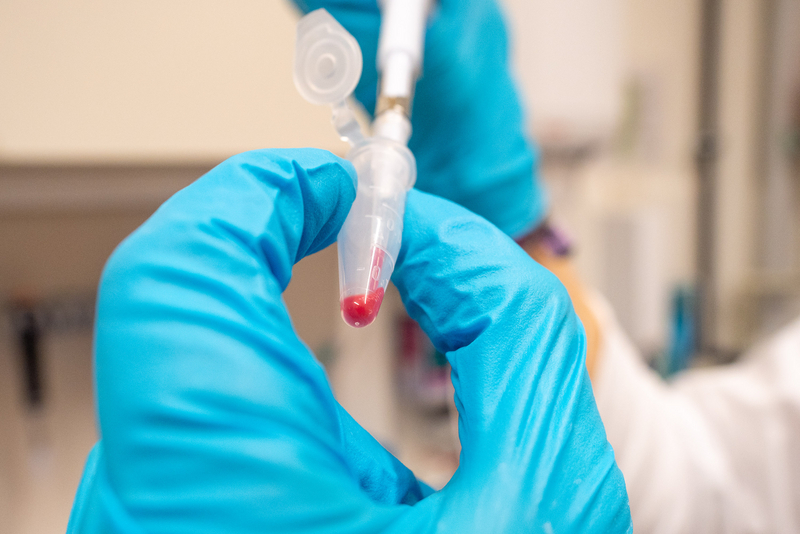
Malaria is one of the world's most prevalent infectious diseases and is caused by parasites of the genus Plasmodium. As resistance to established antimalarial drugs continues to increase, the team led by Prof. Dr. Simone Reber has demonstrated in a proof-of-concept study that compounds targeting the protein tubulin have significant therapeutic potential. Building on these findings, the consortium aims to establish a technological platform for the systematic discovery and development of novel antimalarial compounds.
Responsible Researcher: Prof. Dr. Simone Reber
Interactions in Microbial Co-Cultures
Over the course of evolution, microorganisms have developed specialized metabolic pathways that enable them to survive in challenging environments. In doing so, they produce metabolites that either protect them against competitors or enhance their survival through cooperative interactions with other microorganisms.
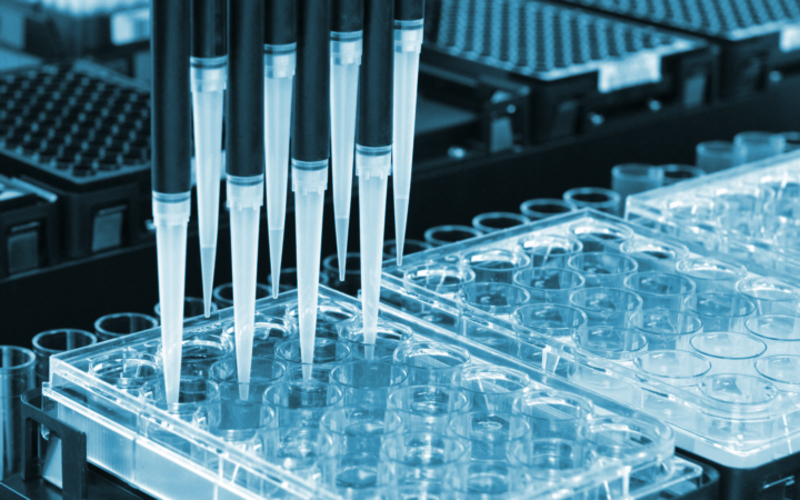
Within this research area, these interactions are systematically investigated using microbial co-cultivation in automated high-throughput screening systems to discover novel bioactive compounds. The research focuses on (1) developing assays for the automated detection of newly induced biosynthetic pathways in microbial co-cultures and (2) transferring promising co-cultivation processes to scalable bioreactor systems.
Responsible Researchers: Prof. Dr. Simon Boecker und Prof. Dr.-Ing. habil. Peter Götz
Polyhydroxyalkanoates (PHA) – Sustainable Biopolymers for a Better Future
Polyhydroxyalkanoates (PHAs) are biodegradable biopolymers that can be completely degraded in nature into carbon dioxide, water, and biomass. Produced by microorganisms from renewable feedstocks and residual biomass, PHAs represent an environmentally friendly alternative to conventional plastics without generating microplastics. Owing to their versatile material properties, they have a wide range of applications in agriculture, food packaging, packaging technologies, and medical engineering.
The research group led by Prof. Sebastian Riedel develops bioprocesses for PHA production, covering the entire scale-up process from laboratory to pilot scale. The aim is to optimize production processes for high product yields, reduce manufacturing costs, and tailor material properties to specific applications by controlling the polymer's monomer composition.
Innovative technologies such as photon density wave spectroscopy are employed for inline process monitoring and control, enabling further improvements in process efficiency. In collaboration with research and industry partners, the group develops scalable manufacturing processes, including coating technologies, injection molding, and film extrusion, to facilitate the industrial application of PHA materials.
Responsible Researcher: Prof. Dr. Sebastian Riedel

